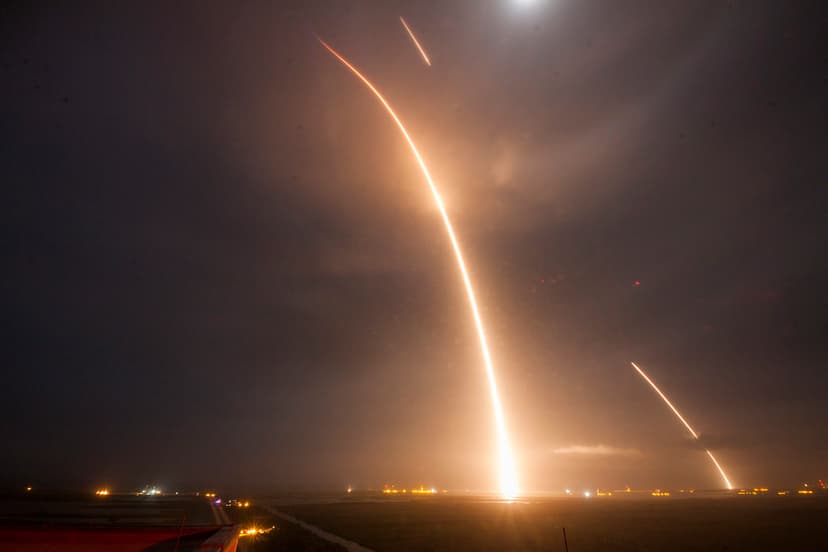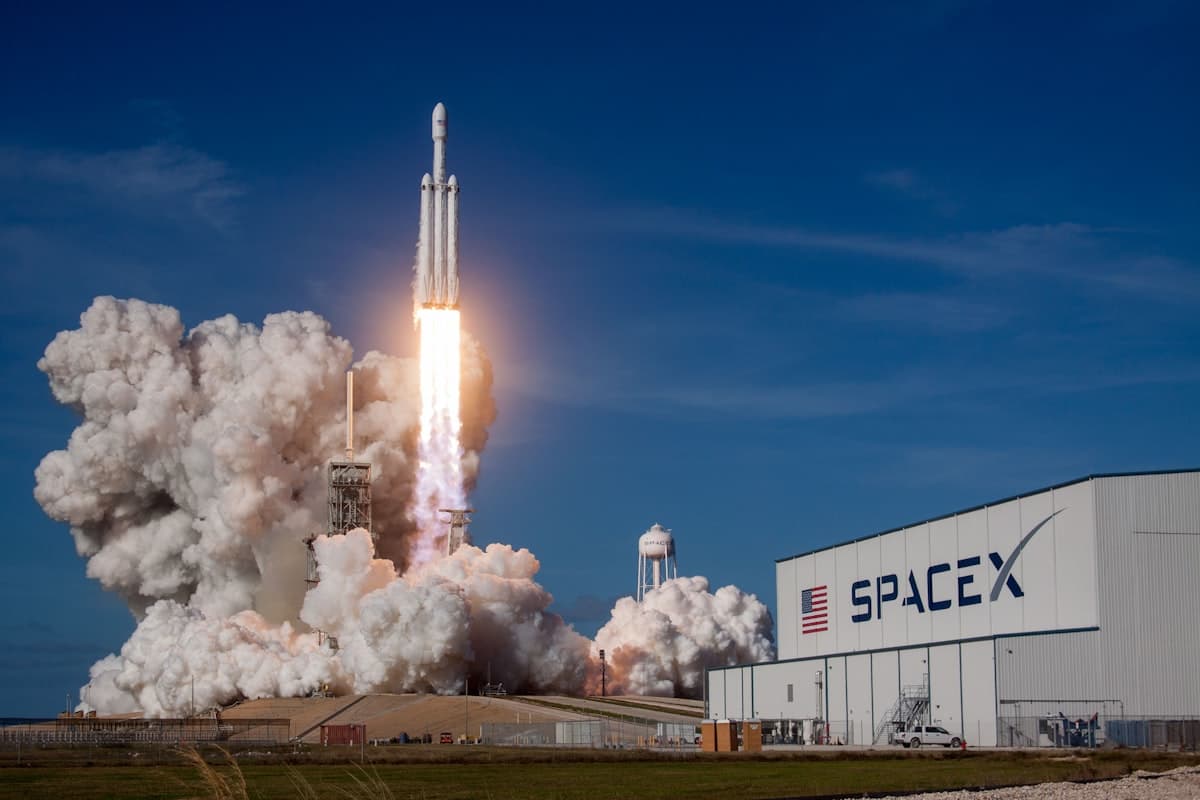
In the next few weeks, SpaceX will attempt something no company has ever done.
Flight 12 of the Starship program will launch from Pad 2 at Starbase, Texas — the first flight of an entirely new vehicle called Starship V3. It stands 408 feet tall. It is powered by Raptor 3 engines that generate 51% more thrust than the original Raptor while weighing less. And it can deliver more than 100 tons of payload to low Earth orbit.
That is nearly three times the capacity of Starship V2. It is more payload than any rocket in history, including the Saturn V that took astronauts to the Moon.
And it is launching weeks before SpaceX is expected to file its S-1 with the SEC.
Why Starship V3 Changes the IPO Math
Most people think of SpaceX as a rocket company. The financial media covers it that way. Analysts model it that way. But Starship V3 is not just a bigger rocket. It is the infrastructure that makes everything else SpaceX is building actually possible.
Consider what 100 tons to orbit unlocks.
SpaceX filed with the FCC in January to deploy up to one million orbital AI satellites — each designed to function as an autonomous data center powered by solar energy. That filing was ambitious on paper. But deploying a million satellites requires a launch vehicle that can carry thousands of them per flight at a fraction of current costs. Starship V2 could not do that economically. Starship V3 can.
SpaceX's Starlink division generates approximately $10.4 billion in annual revenue from over 10 million subscribers. But the next-generation Starlink satellites are larger and heavier. Deploying them at scale requires the payload capacity that only V3 provides.
NASA's Artemis program — which aims to return astronauts to the Moon — depends on Starship as the lunar lander. The mission requires roughly 12 refueling flights in orbit before the lander can reach the Moon. Each refueling flight needs to carry as much propellant as possible. V3 makes those flights feasible on a realistic timeline.
Every major revenue stream SpaceX has — launch, Starlink, government contracts, and the orbital AI initiative — runs through Starship V3. It is not a side project. It is the bottleneck, and it is about to be uncorked.
The Engine Nobody Is Talking About
The Raptor 3 engine is a complete redesign, not an incremental upgrade.
It generates 280 tons of thrust — 51% more than the original Raptor and 22% more than the Raptor 2 that currently powers Starship. It achieves this while being lighter and simpler. SpaceX eliminated the engine heat shield entirely by integrating cooling circuits directly into the engine structure. That single change removes more than 10 tons of dead weight from the vehicle.
“SpaceX's market position can only be described as an emergent monopoly.”
The Raptor 3 has completed more than 300 test firings at SpaceX's McGregor, Texas facility — accumulating over 16,000 seconds of run time. Flight 12 will be its first operational flight.
More thrust, less weight, lower cost. That combination does not just make Starship V3 a better rocket. It makes every satellite launch cheaper, every Starlink deployment faster, and every orbital AI data center more economically viable. It changes the unit economics of everything SpaceX does.
10,000 Satellites and Counting
While Starship V3 prepares for its first flight, SpaceX's existing Falcon 9 fleet continues launching at an unprecedented pace.
SpaceX has already launched more than 674 Starlink satellites in 2026 alone. The company is on the verge of having 10,000 Starlink satellites in orbit simultaneously for the first time — a milestone reached in less than seven years since the first batch launched in May 2019.
No other company, government, or organization has ever operated a satellite constellation at this scale. The closest competitor has fewer than 1,000 satellites in orbit. SpaceX has ten times that and is accelerating.
This is not a company that talks about the future. It is a company that builds it, launches it, and scales it faster than anyone thought possible.
The IPO Is Weeks Away — and the Valuation Could Climb Before It Arrives
Goldman Sachs, JPMorgan Chase, Morgan Stanley, and Bank of America have been selected as IPO underwriters. Bloomberg reported that SpaceX was weighing a confidential S-1 filing as early as March. SpaceX has selected legal advisers for the process. Prediction markets assign an 81% probability the IPO is announced before August.
The reported valuation target is $1.75 trillion. Morgan Stanley has projected SpaceX could be worth over $350 billion on the Starlink business alone — before accounting for launch revenue, government contracts, or the orbital AI initiative.
A successful Starship V3 flight would validate the technology behind all of those revenue streams. It would demonstrate that SpaceX can deliver payloads at a cost and scale that no competitor can match. And it would land in the headlines weeks before the S-1 is expected to drop.
The valuation case gets stronger with every successful flight. And V3 is the most important flight yet.
Everyday Investors Can Now Get In Before the IPO — Starting at $500
Pre-IPO investing used to be reserved for institutional investors and accredited individuals. Most opportunities required minimums of $10,000 or more. If you were not a Wall Street insider, you were locked out.
That is no longer the case. Jeff Brown has published research showing how regular Americans can position themselves before the SpaceX IPO, starting with as little as $500. No accredited investor status. No connections on Wall Street. The process is as simple as buying any other stock.
And if you are skeptical, good. Every investment carries risk, and pre-IPO positions are less liquid and more uncertain than public stocks. Nobody knows whether SpaceX's IPO will deliver the kind of returns that Google, Facebook, and Airbnb delivered. But the access that did not exist before? That is real. And the window is closing.
What Jeff Brown's Free Presentation Covers
Jeff Brown spent over two decades as a senior executive at Qualcomm, NXP Semiconductors, and Juniper Networks — companies generating more than $50 billion in combined annual revenue. He has been tracking the SpaceX IPO timeline for months, specifically through the lens of what everyday investors can do before the filing lands.
Brown recently published a free video presentation covering his complete SpaceX research — what most analysts are missing, how everyday investors can position, and the risks.
Brown publishes his ongoing research through The Near Future Report.
The presentation is free — for now. Once the S-1 is filed, the window closes. That filing could come any day.