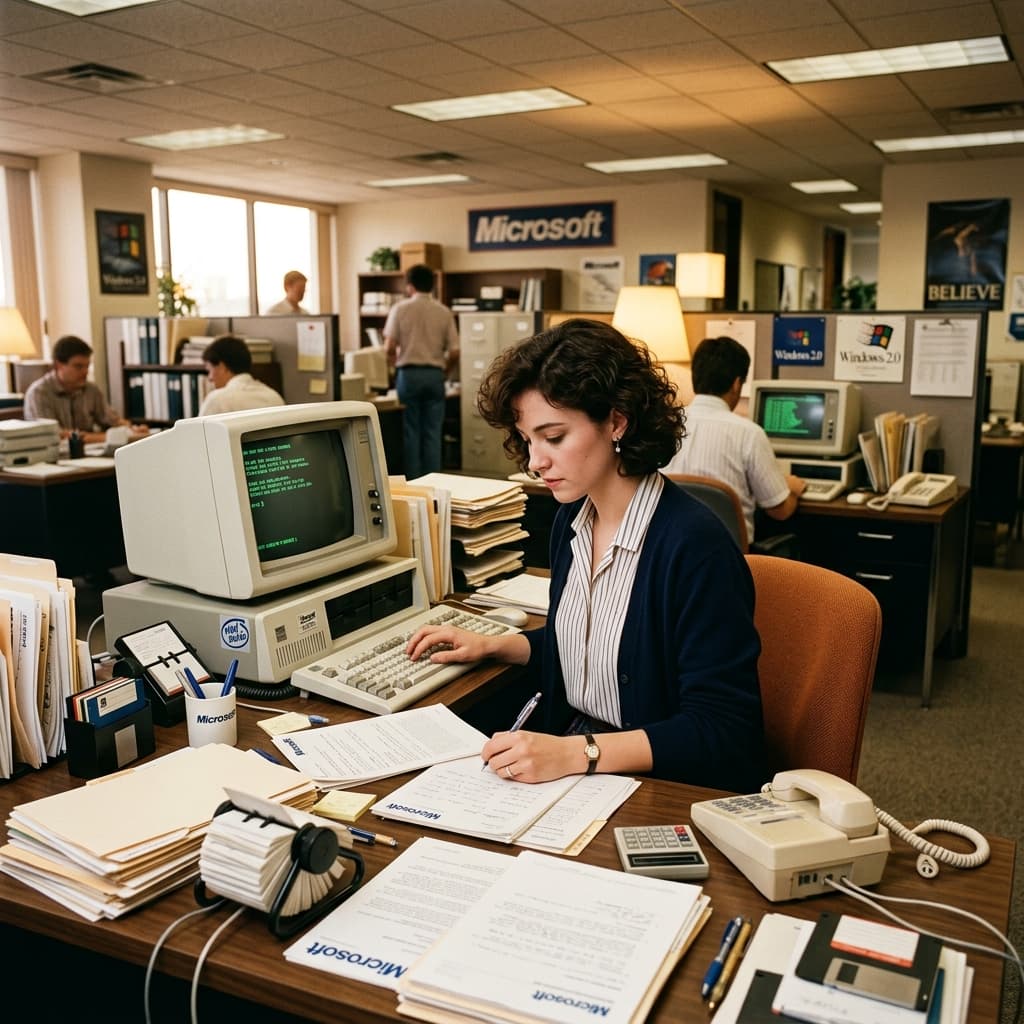
In the late 1970s, a young woman named Andrea Lewis was working as a freelance technical writer in the Pacific Northwest.
She answered an ad for a small, scrappy tech company that needed someone to write manuals and answer the phones. The company had barely a dozen employees. She was one of the earliest hires.
Her starting salary was modest, but the job came with something else: stock options in the unproven startup.
She wasn't an engineer. She wasn't a venture capitalist. She was an everyday person trying to pay her rent.
The Quiet Period Before the Explosion
For several years, nothing much happened over at that small company — which was called Microsoft. They quietly built out their operating system. To the outside world, it looked like just another group of nerds writing software.
Then came the explosion. On March 13, 1986, Microsoft went public at $21 per share.
By the end of the day, it had closed at $27.75. The IPO famously created three billionaires and an estimated 12,000 millionaires among its employees.
Because of the options she had received for writing manuals and answering phones, Andrea Lewis became one of the biggest beneficiaries of the largest tech wealth creation event of the decade. Early employees like her walked away with life-changing fortunes — enough to never worry about money again.
That kind of wealth has traditionally been the exclusive domain of employees and Wall Street insiders. But that monopoly is fracturing.
Lewis's story isn't unique. It repeats during every major technology paradigm shift. Early employees weather a "quiet period" before a vertical technology breakthrough sends the company public, permanently changing their lives.
Right now, we are in the middle of another quiet period. And the explosion could come in a matter of weeks.
The Starship V3 Breakthrough
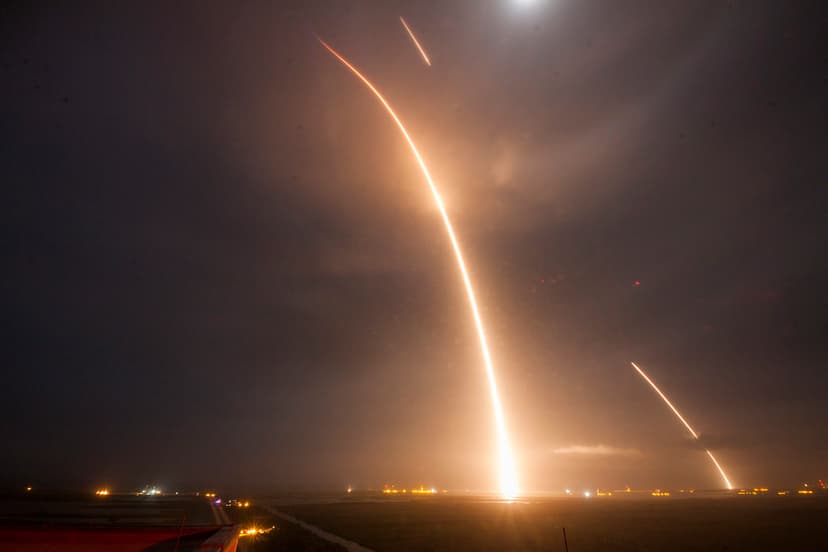
For the last several months, SpaceX has been in a relative quiet period. There haven't been explosive test flights dominating the news cycle. The casual observer might think the company has slowed down.
They would be entirely wrong.
SpaceX has been preparing for the debut of the completely overhauled Starship Version 3. Equipped with the new Raptor 3 engines, Starship V3 is capable of lifting over 200 metric tons to orbit in a fully reusable configuration. It is the holy grail of spaceflight. Once orbital refueling is demonstrated with V3, SpaceX won't just dominate Earth's orbit — it will open up the entire solar system.
But the rockets are only half the story.
In early 2026, SpaceX completed a monumental merger with xAI at a combined valuation of $1.25 trillion. They filed with the FCC to deploy one million orbital AI satellites.
This is the vertical explosion the market is waiting for. It's no longer a rocket company. It is an artificial intelligence monopoly that happens to own the only delivery system capable of reaching space at scale.
The Underwriters Are Assembling
The window for everyday investors is measured in weeks, not years.
SpaceX is expected to go public this summer in what could be the largest public offering in history, at a valuation north of $2 trillion. Goldman Sachs, JPMorgan, and Bank of America have already been tapped as underwriters. Bloomberg reports the S-1 paperwork could come at any time.
You don't need to answer phones at SpaceX to get positioned. You don't need to be an accredited investor. You don't need a Wall Street broker.
Former tech executive Jeff Brown — who flagged Nvidia before its AI breakout and recommended Tesla before it hit $1 trillion — has released a free research presentation detailing how everyday investors can get exposure to SpaceX before the IPO. The process is as simple as buying any other stock, starting with as little as $500, from your regular brokerage account.
All investments carry risk, and positions taken before a public offering are naturally less liquid than publicly traded stocks. But the alternative is waiting until the IPO hits the public market — after the largest institutional gains have already been captured.
By the time the headlines hit the front page of the Wall Street Journal, the window will have closed.