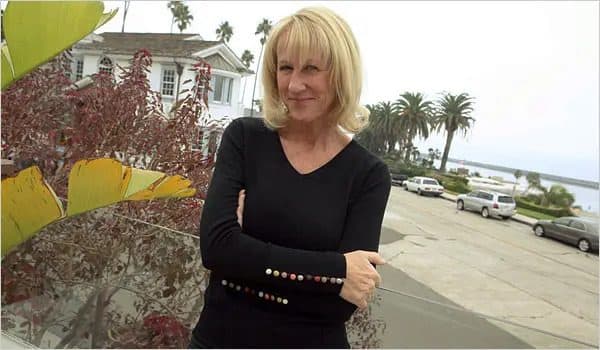
In 1999, Bonnie Brown was recently divorced, nearly broke, and sleeping on her sister's couch in Northern California. She had no savings to speak of. No investment portfolio. No connections in Silicon Valley.
What she did have was a massage therapy license and a willingness to take a part-time job that paid $450 a week.
The job was at a small startup called Google. At the time, the company had fewer than 50 employees and was operating out of a converted garage. Nobody outside of a small circle of engineers had heard of it. The idea of an internet search engine becoming one of the most valuable companies in history would have sounded absurd.
Brown did something unusual for a part-time contractor: she negotiated stock options as part of her compensation. It was almost unheard of for someone in her position. Most people in her situation would have asked for more cash.
Five Years Later, Google Went Public. She Never Worked Again.
On August 19, 2004, Google went public at $85 per share.
Bonnie Brown, the part-time masseuse who had been sleeping on a couch, became a multi-multi-millionaire overnight. Not because she was a tech genius. Not because she had wealthy parents or Wall Street connections. But because she had positioned herself in a technology company before it went public — and held on.
Today, she lives in a 3,000-square-foot house in Nevada. She runs a charitable foundation. She has a private Pilates instructor. Her financial concerns are, by her own account, nonexistent.
Her story is remarkable. But it is not unique.
A Touring Chef Took Stock Instead of a Raise — It Was Worth $26 Million
In the same year Brown started giving massages at Google, a chef named Charlie Ayers entered a cooking competition he'd heard about through a friend. The contest was simple: cook a meal for about 40 people at a startup, and if they liked it, you got the job.
Ayers, who had previously cooked for the Grateful Dead on tour, won the cook-off and became Google's in-house chef — employee number 53. As part of his compensation, he received 40,000 shares of Google stock.
On IPO day, those shares were worth approximately $4 million. By 2007, because he never sold a single share, they were worth $26 million. Ayers left Google and opened a cafe in Palo Alto.
A touring chef. $26 million. Because he was positioned before the IPO.
A Graffiti Artist Took Stock in a Company He Thought Was "Pointless" — It Paid $200 Million
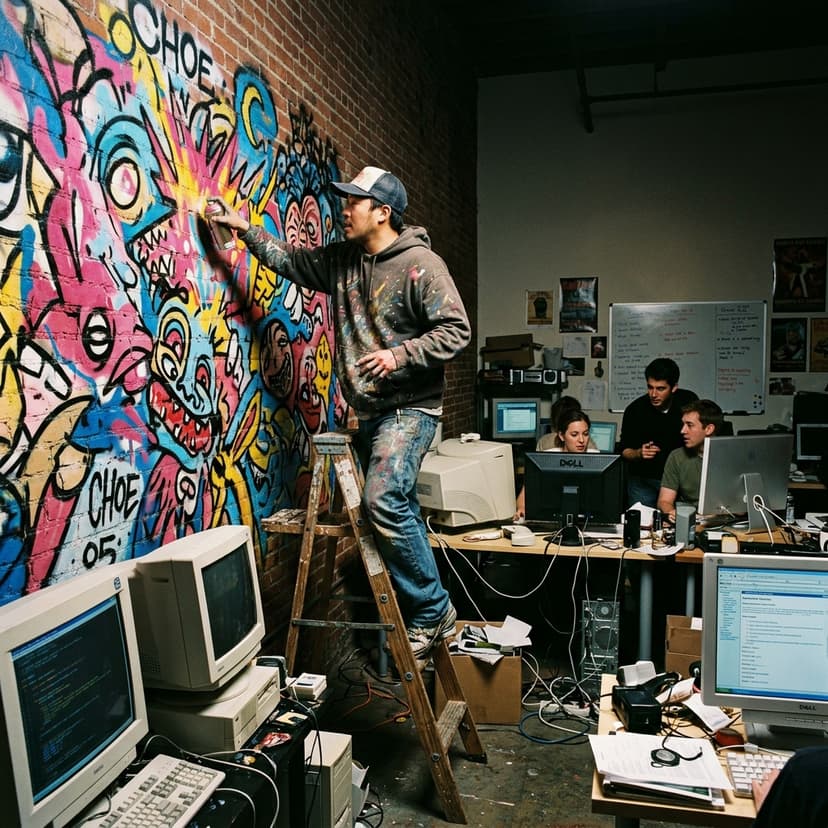
In 2005, a graffiti artist named David Choe was hired to paint murals inside the first real office of a company called Facebook. The company offered him $60,000 in cash for the work.
Choe turned down the cash. He took stock instead.
“I thought the whole idea was ridiculous and pointless. But I took the stock anyway.”
By his own account, Choe thought Facebook's business model was "ridiculous and pointless." He was a street artist, not an investor. He had been homeless at various points in his life. He didn't take the stock because he believed in social networking. He took it because someone told him it might be worth something someday, and he figured he had nothing to lose.
When Facebook went public in May 2012 at $38 per share, David Choe's shares were worth approximately $200 million.
A formerly homeless graffiti artist. $200 million. Because he was positioned before the IPO — even though he didn't believe in the company.
One Man Walked Away From a 10% Stake in Apple. It Would Be Worth $400 Billion.
Not every story ends well.
In 1976, Ronald Wayne was the third co-founder of Apple Computer, alongside Steve Jobs and Steve Wozniak. He owned 10% of the company. Twelve days after Apple was founded, Wayne sold his entire stake for $800.
He was 41 years old at the time. He was worried about financial liability from loans Jobs was taking out. He wanted certainty. He wanted to play it safe.
That 10% stake in Apple would be worth approximately $400 billion today. Wayne has said publicly: "If I'd stayed at Apple, I would have probably ended up the richest man in the cemetery."
Wayne's story is not included here to mock him. His concerns were reasonable at the time. But his story illustrates the same thing the other three stories illustrate from the opposite side:
The window matters. Being positioned before a technology company goes public is what separates the people who transform their financial lives from the people who watch it happen from the sidelines.
Google Created 900 Millionaires. Microsoft Created 12,000. SpaceX Could Be Next.
These stories share a common structure. A regular person — a masseuse, a chef, a graffiti artist — finds themselves with access to a technology company before it goes public. The company is promising but unproven. The outcome is uncertain. Most people around them think it's too risky, too speculative, or too unusual to bother with.
They take the position anyway. And when the company goes public, the wealth creation that occurs in the first days and weeks of trading changes their lives permanently.
Google's IPO alone created more than 900 millionaires — many of them non-technical employees who simply happened to be in the right place and accepted stock as part of their compensation. Microsoft's 1986 IPO created an estimated 12,000 millionaires. Facebook's IPO made millionaires of roughly 1,000 early employees.
The pattern has repeated with nearly every major technology IPO in modern history. And it has, until recently, been almost entirely inaccessible to everyday Americans who weren't employed by these companies.
SpaceX Is Expected to IPO This Summer at a $1.5 Trillion Valuation
SpaceX is expected to go public this summer in what would be the largest IPO in history.
The company completed 165 orbital launches in 2025, controlling 85% of all U.S. orbital flights. Its Starlink division serves over 10 million subscribers across 150 countries and generates approximately $10.4 billion in annual revenue. In January 2026, SpaceX merged with xAI at a combined valuation of $1.25 trillion and filed with the FCC to deploy one million orbital AI satellites — each designed to function as an autonomous data center powered by solar energy.
“SpaceX's market position can only be described as an emergent monopoly.”
Goldman Sachs, JPMorgan Chase, Morgan Stanley, and Bank of America have been selected as underwriters. The confidential S-1 filing with the SEC is expected imminently. Prediction markets assign an 81% probability that the IPO will be announced before August 2026.
Everyday Investors Can Now Get In Before the IPO — Starting at $500
For most of modern history, the only way to participate in these wealth events was to work at the company. If you weren't an employee of Google in 2003, or Facebook in 2010, or Apple in 1976, you were locked out.
Pre-IPO investing used to be reserved for institutional investors and accredited individuals. Most opportunities required minimums of $10,000 or more. If you weren't a Wall Street insider, you were locked out.
That's no longer the case. Jeff Brown has published research showing how regular Americans can position themselves before the SpaceX IPO, starting with as little as $500. No accredited investor status. No connections on Wall Street. The process is as simple as buying any other stock.
You Don't Need to Be an Employee, an Insider, or Wealthy
If you're reading this and thinking "That's a nice story, but those people worked at the company — I can't do that" — that's exactly the point.
Bonnie Brown, Charlie Ayers, and David Choe all got in because they happened to work at the right company. The rest of America was locked out. That was the only path available.
It isn't anymore.
No finance degree or Wall Street connections required. The process is designed for people who've never made a pre-IPO investment before — starting at $500.
And if you're skeptical — good. Every investment carries risk, and pre-IPO positions are less liquid and more uncertain than public stocks. Nobody knows whether SpaceX's IPO will create the kind of wealth that Google and Facebook created. Past performance does not predict future results. But the access that didn't exist before? That part is real.
What a Former Tech Executive's Free Briefing Covers
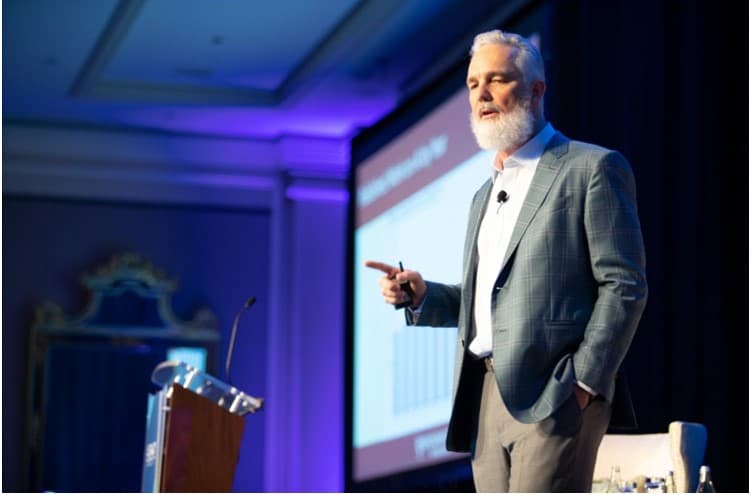
Jeff Brown spent over two decades as a senior executive at Qualcomm, NXP Semiconductors, and Juniper Networks — companies generating more than $50 billion in combined annual revenue. He's spent months analyzing the SpaceX opportunity specifically through the lens of accessibility for everyday investors.
Brown recently published a free video presentation covering his complete SpaceX research — what most analysts are missing, how everyday investors can position, and the risks.
Brown publishes his ongoing research through The Near Future Report.
The S-1 Filing Could Land Any Day — and the Window Narrows After That
The presentation is free — for now. Once the S-1 is filed, the window closes. That filing could come any day.