On January 30th, 2026, SpaceX submitted a proposal to the Federal Communications Commission that received almost no mainstream media coverage.
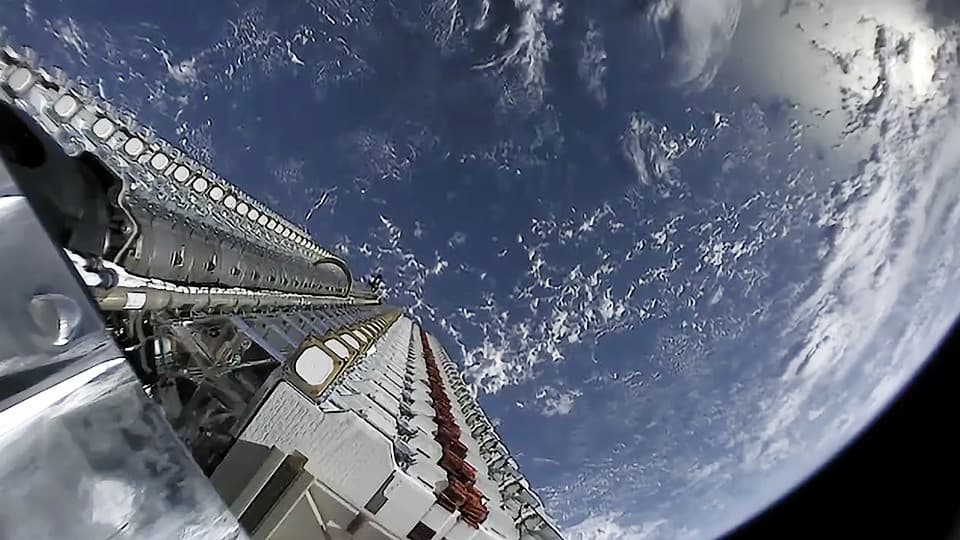
The filing, accepted for review on February 4th, outlines plans to deploy one million satellites into low Earth orbit. But these aren't communication satellites. According to the technical specifications in the filing, each satellite would function as an autonomous AI data center — powered entirely by solar energy, requiring no terrestrial electricity, no cooling infrastructure, and no physical real estate.
If implemented at the scale described in the filing, this network could represent a fundamental shift in how artificial intelligence infrastructure is built and operated globally.
Solar-Powered AI in Orbit Eliminates the Two Biggest Costs in the Industry
The implications extend far beyond the aerospace industry.
Traditional AI data centers are constrained by three major factors: electricity costs, cooling requirements, and physical space. A single facility runs up $21 million per year in power and cooling alone, consumes the electricity of 100,000 households, and uses millions of gallons of water daily. These constraints have driven companies to build near rivers for water cooling and near power plants for electricity access.
An orbital AI network would bypass all three constraints. Solar panels in space receive unfiltered sunlight 24 hours a day. The vacuum of space provides passive cooling. And there is no zoning, permitting, or land acquisition required. The potential cost advantages over terrestrial data centers are significant.
This appears to be the strategic rationale behind SpaceX's January merger with xAI, Elon Musk's artificial intelligence company. The combined entity now carries a valuation of approximately $1.25 trillion — and Musk has stated publicly that orbital AI compute could become the lowest-cost option within two to three years.
9,500 Satellites Already in Orbit. 165 Launches Last Year. The Infrastructure Exists.
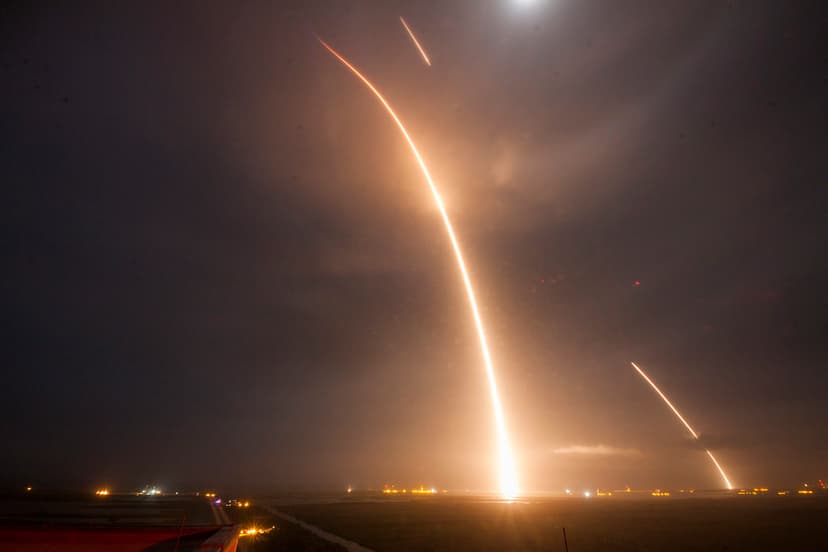
What makes this filing particularly notable is that SpaceX already possesses the infrastructure to execute it.
The company completed 165 orbital launches in 2025 — more than every other country on Earth combined, representing approximately 85% of all U.S. orbital launches. Its Starlink subsidiary operates more than 9,500 satellites across 150 countries with over 10 million subscribers. Revenue grew from $1.4 billion to over $10.4 billion in three years.
“SpaceX's market position can only be described as an emergent monopoly.”
The existing Starlink constellation essentially serves as a proof of concept and deployment infrastructure for the proposed AI satellite network. SpaceX's next-generation Starship rocket is designed to deploy thousands of satellites per launch at a 90% cost reduction — making the one-million-satellite target operationally feasible.
Secure, Free & No Obligation
Morgan Stanley's $350 Billion Valuation Didn't Account for This Filing
The financial implications of the upcoming IPO are drawing significant institutional attention.
“The SpaceX IPO is the big market event of 2026.”
CNBC has called the SpaceX IPO "the big market event of 2026." Forbes says it could be the biggest public offering in history. The valuation is expected to exceed $1.5 trillion when trading begins this summer.
Morgan Stanley had projected SpaceX could be worth over $350 billion on its Starlink business alone. But that projection was issued before the xAI merger and before the FCC filing for the AI satellite network — both of which could substantially expand the company's addressable market. If the orbital AI thesis proves correct, $1.5 trillion may be a starting point, not a ceiling.
Everyday Investors Can Now Get In Before the IPO — Starting at $500
For most of market history, even if you understood the significance of a filing like this, there was nothing you could do about it before the IPO. Pre-IPO investing was reserved for institutional investors and accredited individuals. Most opportunities required minimums of $10,000 or more. If you weren't a Wall Street insider, you were locked out.
That's no longer the case. Jeff Brown has published research showing how regular Americans can position themselves before the SpaceX IPO, starting with as little as $500. No accredited investor status. No connections on Wall Street. The process is as simple as buying any other stock.
You Don't Need to Understand FCC Filings. You Need to Understand What's About to Happen.
If this feels too technical — step back.
The core idea is simple: SpaceX filed to put AI data centers in space, where electricity and cooling are free. It already has the rockets and satellite factories to do it. It merged with an AI company to provide the computing demand. And it's about to go public.
You don't need to read FCC documents. The process is straightforward and starts at $500. It's designed for people who've never made a pre-IPO investment.
And if you're skeptical — you should be. The orbital AI network is ambitious and unproven at full scale. Pre-IPO positions carry real risk. But the filing is real, the infrastructure exists, and the IPO timeline is confirmed.
What Jeff Brown's Free Briefing Covers
Jeff Brown spent over two decades as a senior executive at Qualcomm, NXP Semiconductors, and Juniper Networks — companies generating more than $50 billion in combined annual revenue.
Brown recently published a free video presentation covering his complete SpaceX research — what most analysts are missing, how everyday investors can position, and the risks.
Brown publishes his ongoing research through The Near Future Report.
The S-1 Could Come This Month. Once It Does, the Market Will Catch Up to This Filing.
Bloomberg reported in late February that SpaceX was weighing a confidential S-1 filing as early as March. Once that filing lands, the company's financials — including the xAI revenue streams and AI infrastructure plans — become visible to every analyst on Wall Street.
Right now, the FCC filing is hiding in plain sight. Most investors still think SpaceX is a rocket company. That misconception is the window.
The presentation is free — for now. Once the S-1 is filed, the window closes. That filing could come any day.