It takes the average American roughly 30 years of working, saving, and investing to build a meaningful retirement portfolio. Paycheck by paycheck. Contribution by contribution. Year after year of compound interest slowly building toward a number that, for many people, still doesn't feel like enough.
Then there are the moments in financial markets when wealth is created on a completely different timeline.
When Facebook went public in 2012, early investors who had secured positions before IPO day saw the value of their holdings appreciate dramatically within 24 hours of trading. The same pattern repeated with Uber in 2019. With Airbnb in 2020. With Google in 2004.
In each case, the most significant gains occurred for those who were already positioned before shares became available to the general public. The wealth creation happened not over 30 years, but in a concentrated window around the IPO event.
These were not lottery tickets. They were calculated positions in companies with real revenue, real market dominance, and real growth trajectories. The investors who participated simply had access that most Americans did not.
The Biggest IPO in History Is Expected This Summer — and the Pattern Is About to Repeat
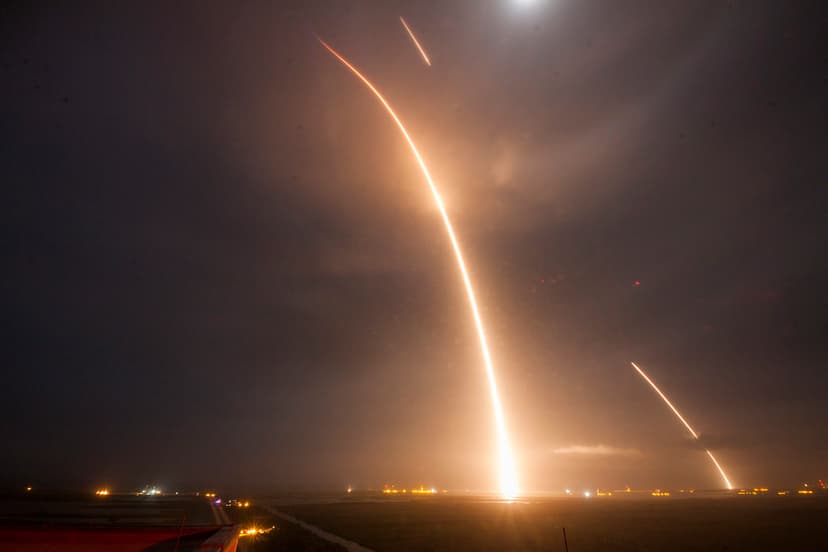
SpaceX, the aerospace and artificial intelligence company now valued at approximately $1.25 trillion, is expected to go public this summer.
“The SpaceX IPO could be the biggest public offering in history.”
The scale of this IPO is unlike anything the market has seen. Forbes has called it potentially the biggest IPO in history. CNBC labeled it "the big market event of 2026." The valuation is expected to exceed $1.5 trillion when shares begin trading.
The company's fundamentals are driving the institutional enthusiasm. SpaceX completed 165 orbital launches in 2025 — more than every other country on Earth combined, controlling approximately 85% of all U.S. orbital launches. Its Starlink subsidiary grew revenue to approximately $10.4 billion, now serving 10 million subscribers across 150 countries.
In January 2026, SpaceX merged with xAI at a combined valuation of $1.25 trillion and filed with the FCC to deploy one million orbital AI satellites — each designed to function as an autonomous data center powered by solar energy.
“SpaceX's market position can only be described as an emergent monopoly.”
Secure, Free & No Obligation
Everyday Investors Can Now Get In Before the IPO — Starting at $500
During every previous major IPO, the pre-IPO investment window was functionally closed to everyday Americans. The minimum investments, the accredited investor requirements, and the network-dependent access structures ensured that ordinary people were spectators to the wealth creation, not participants.
That's no longer the case. Pre-IPO investing used to be reserved for institutional investors and accredited individuals. Most platforms required minimums of $10,000 or more. If you weren't a Wall Street insider, you were locked out.
Jeff Brown has published research showing how regular Americans can position themselves before the SpaceX IPO, starting with as little as $500. No accredited investor status. No connections on Wall Street. The process is as simple as buying any other stock.
For the first time in modern market history, everyday investors have the chance to position themselves before a major IPO — the same way that institutional investors positioned themselves before Facebook, Uber, Airbnb, and Google.
This does not mean that the outcome will be the same. Every investment carries risk, and past IPO results do not predict future performance. But the access — the ability to participate at all — is something that did not exist for regular Americans during any previous IPO of this magnitude.
You Can Keep Building Slowly — or You Can Add Something That Was Never Available Before
The question facing everyday investors right now is straightforward.
You can continue building wealth the way you always have — slowly, incrementally, over decades of contributions and compound returns. That approach has merit and has served millions of Americans well.
Or you can examine whether a pre-IPO position in what may be the most significant public offering in history belongs alongside your existing strategy. Not as a replacement for it. But as something that was previously unavailable to you and is now, for a limited window, accessible.
The minimum is $500. The process is straightforward — designed for people who've never made a pre-IPO investment before.
And if you're skeptical, you should be. Pre-IPO investments are less liquid than public stocks. There's no guarantee the IPO creates the kind of single-day wealth events that previous mega-IPOs did. But the question isn't whether this is risk-free — nothing in investing is. The question is whether having access to a category of investment that was locked away from you for decades is worth learning about.
What Jeff Brown's Free Briefing Covers
Jeff Brown spent over two decades as a senior executive at Qualcomm, NXP Semiconductors, and Juniper Networks — companies generating more than $50 billion in combined annual revenue.
Brown recently published a free video presentation covering his complete SpaceX research — what most analysts are missing, how everyday investors can position, and the risks.
Brown publishes his ongoing research through The Near Future Report.
The Pre-IPO Window Closes When the S-1 Goes Public. That Could Be This Month.
Bloomberg reported in late February that SpaceX was weighing a confidential S-1 filing as early as March. Once that filing lands, the IPO process is formally underway. Institutional demand floods in. Pre-IPO pricing adjusts upward. The window that exists right now — where everyday investors can position on the same platforms, at the same terms — begins to close.
After that, everyday investors will be in the same position they've always been: buying shares on the open market after the initial price movement has already occurred. The same pattern. The same side of the trade.
The presentation is free — for now. Once the S-1 is filed, the window closes. That filing could come any day.